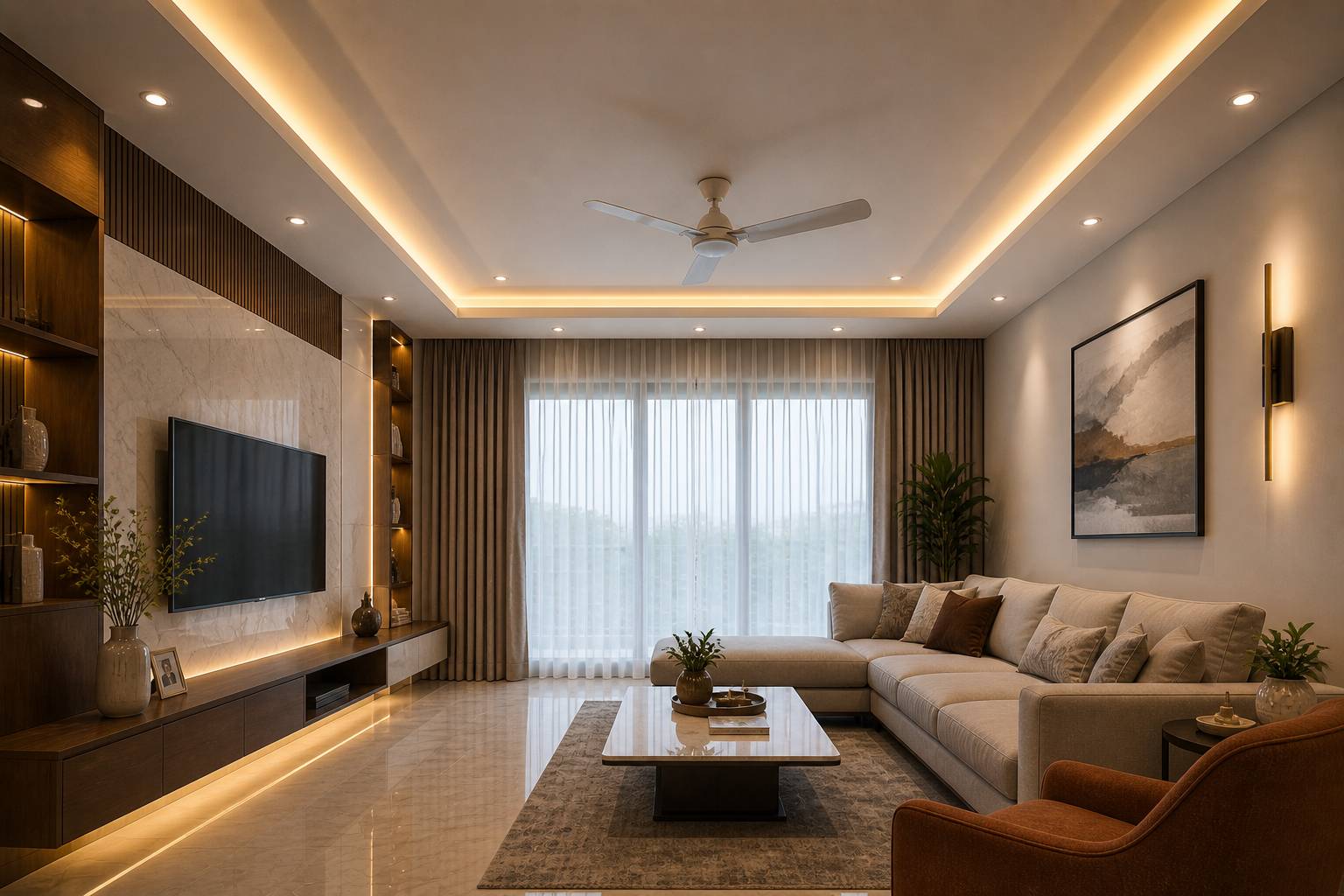
The ceiling is the most underutilised surface in Indian home interiors. While homeowners invest significantly in flooring, walls, and furniture, the ceiling is often left as a blank white expanse. A well-designed false ceiling — with the right type, shape, and lighting — can completely transform the look and feel of a room.
1. Types of False Ceilings
- POP (Plaster of Paris): The most traditional type in India. Extremely versatile — can be shaped into curves, cornices, and intricate patterns. Lightweight, easily painted. Best for ornate or classical designs.
- Gypsum Board (Drywall): The modern professional's choice. Clean, flat surfaces with consistent finish. Easy to integrate recessed lighting, air conditioning vents, and speakers. Most premium residential projects use gypsum board.
- Wood / MDF Panels: Warm, organic, and architecturally striking. Used as a feature ceiling or as a partial ceiling over a dining table or bed. Wood grain laminates or real wood slats are both popular.
- Grid / T-Bar Ceiling: Commercial look — removable panels for access to utilities. Sometimes used in home offices and basements.
- Stretch Ceiling: A translucent or solid PVC film stretched over an aluminium frame. Premium product with a seamless finish. Can be backlit for a cloud-like glowing effect.
"A false ceiling reduces your room height. Never go below 9 feet clearance after installation. For rooms with standard 10-foot slabs, a false ceiling drop of 9–12 inches is ideal."
2. Popular False Ceiling Designs for Each Room
Living Room
The living room ceiling is a canvas for drama. Popular designs include a perimeter cove ceiling (a dropped border around the edges with a raised central panel), a tray ceiling (a recessed central section creating depth), or a floating panel over the seating area anchored by a pendant light.
Bedroom
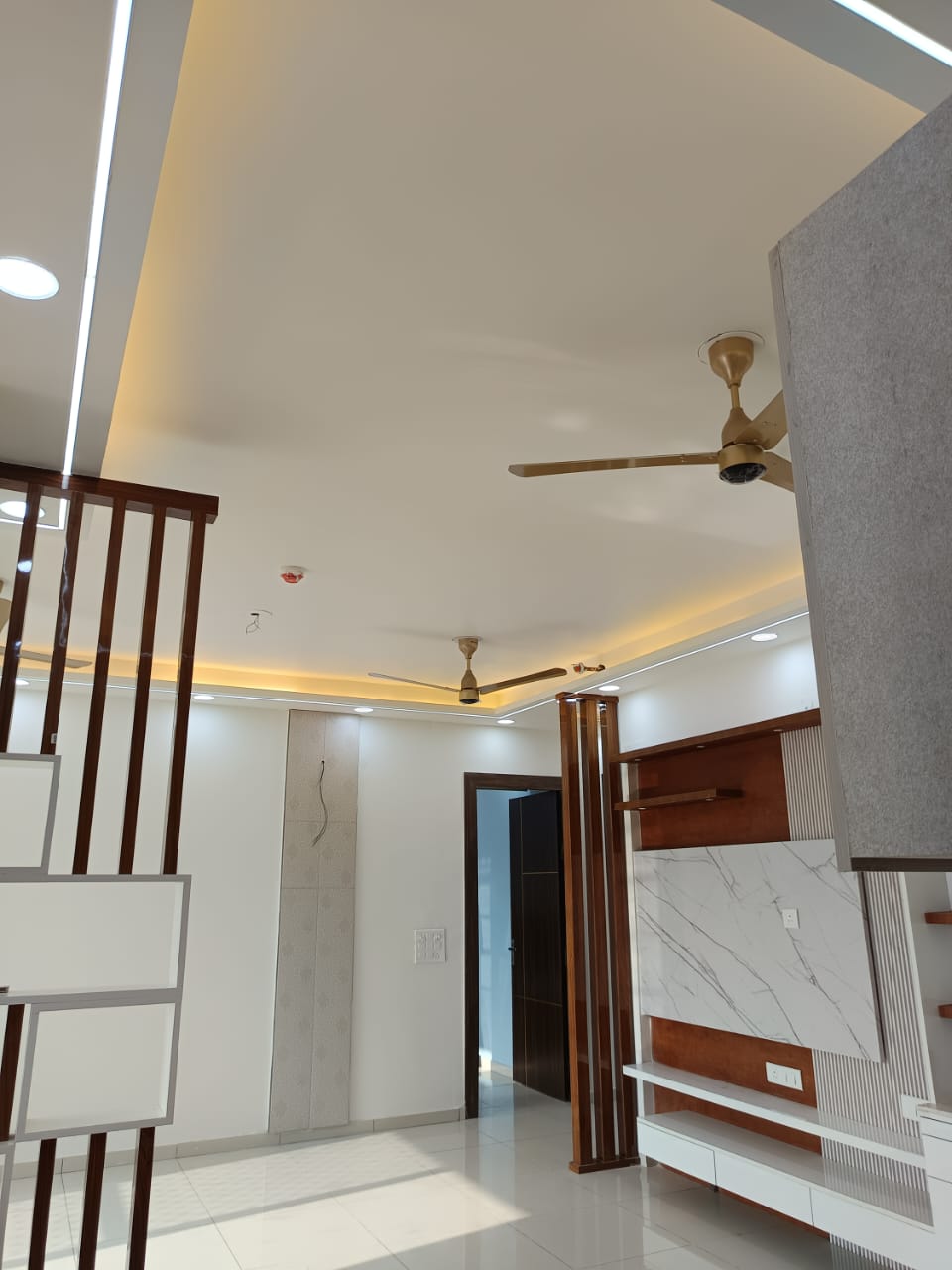
Bedroom ceilings call for subtlety. A simple rectangular tray ceiling centred over the bed with warm cove lighting is the most popular design — elegant, calming, and functional. Avoid complex patterns in bedrooms; they disturb visual rest.
Kitchen
A clean, flat gypsum board ceiling with recessed LED downlights is ideal for kitchens. Avoid coves in kitchens — grease and cooking residue collect in the recessed channels and are very difficult to clean.
Dining Area
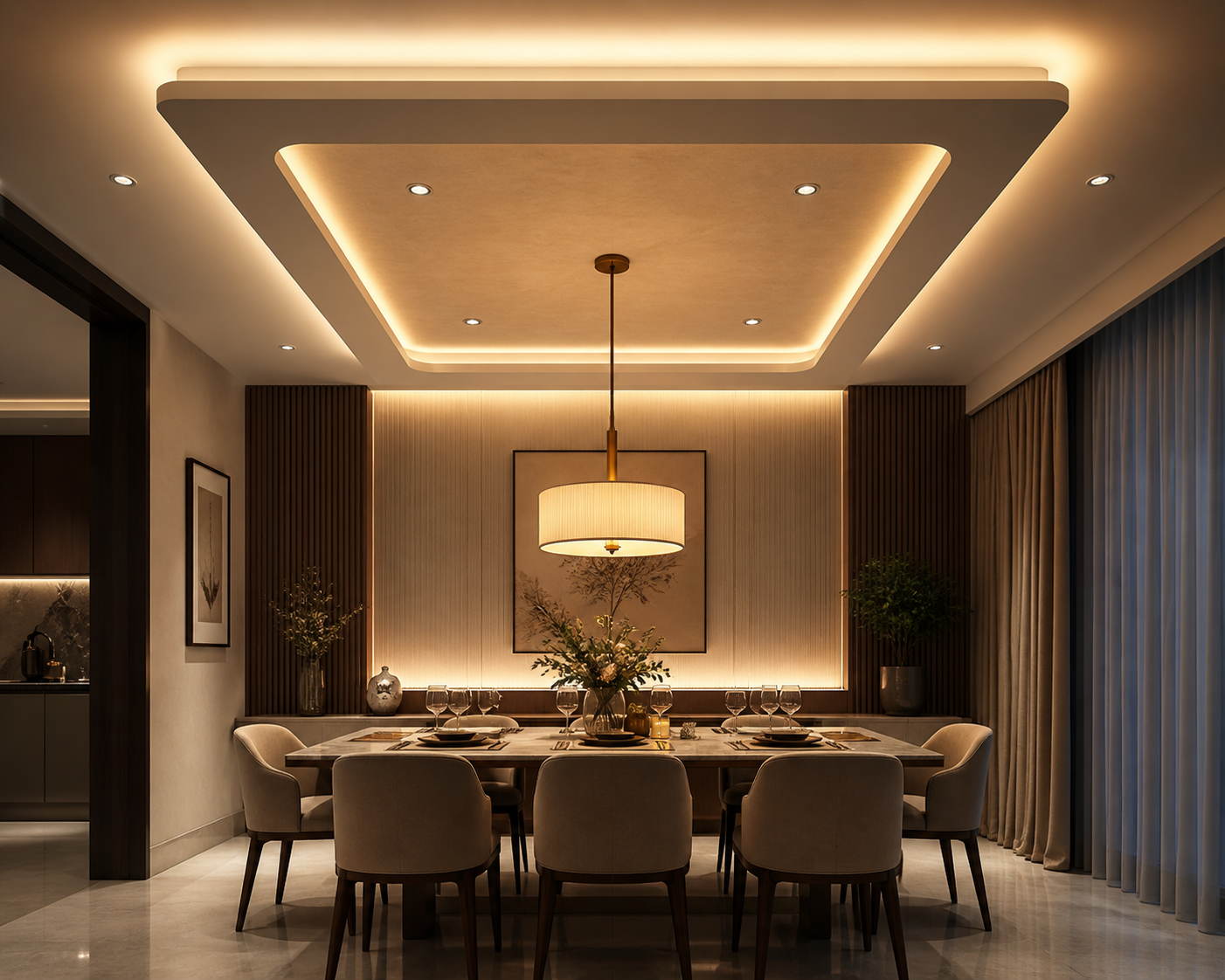
A circular or rectangular false ceiling panel directly over the dining table, with a pendant light hanging from its centre, creates a beautifully intimate dining experience.
3. Lighting in False Ceilings
- Cove Lighting (LED Strip in Recessed Channel): Creates a floating, indirect glow. Use warm white (2700K–3000K) LEDs. Never use cool white in living or bedroom ceilings.
- Recessed Downlights: The workhorse of ceiling lighting. Can be fixed or adjustable. Space them 1.2–1.5 m apart for even illumination.
- Pendant Lights Through Ceiling: For dining tables and bedroom beds — a pendant drops through the false ceiling to create a visual focal point.
- RGB / Colour-Changing Strips: Popular for home theatres and gaming rooms. Use sparingly in living rooms — can make spaces feel cheap if overused.
4. False Ceiling Cost in India (2026)
- Basic POP Cornice: ₹40–60 per running foot for border cornices only.
- POP False Ceiling: ₹80–130 per sq ft for full POP false ceiling.
- Gypsum Board Ceiling: ₹90–160 per sq ft depending on design complexity.
- Wood Slatted Ceiling: ₹200–500 per sq ft for premium wood or quality MDF slats.
- These figures exclude lighting fittings and electrical work, which typically add ₹25,000–80,000 to the project depending on complexity.
5. Things to Decide Before Work Starts
- Finalise the AC location — the false ceiling contractor and AC installer must coordinate. The duct opening and supply/return grilles must be integrated into the ceiling design.
- Plan all electrical points — fan positions, lighting circuit zones, speaker wires — before ceiling installation. Changes after boarding are expensive.
- Confirm ceiling height clearance is acceptable everywhere, including doorframes.
- Choose all lighting fittings before installation — fitting sizes determine the size of cutouts in the ceiling.