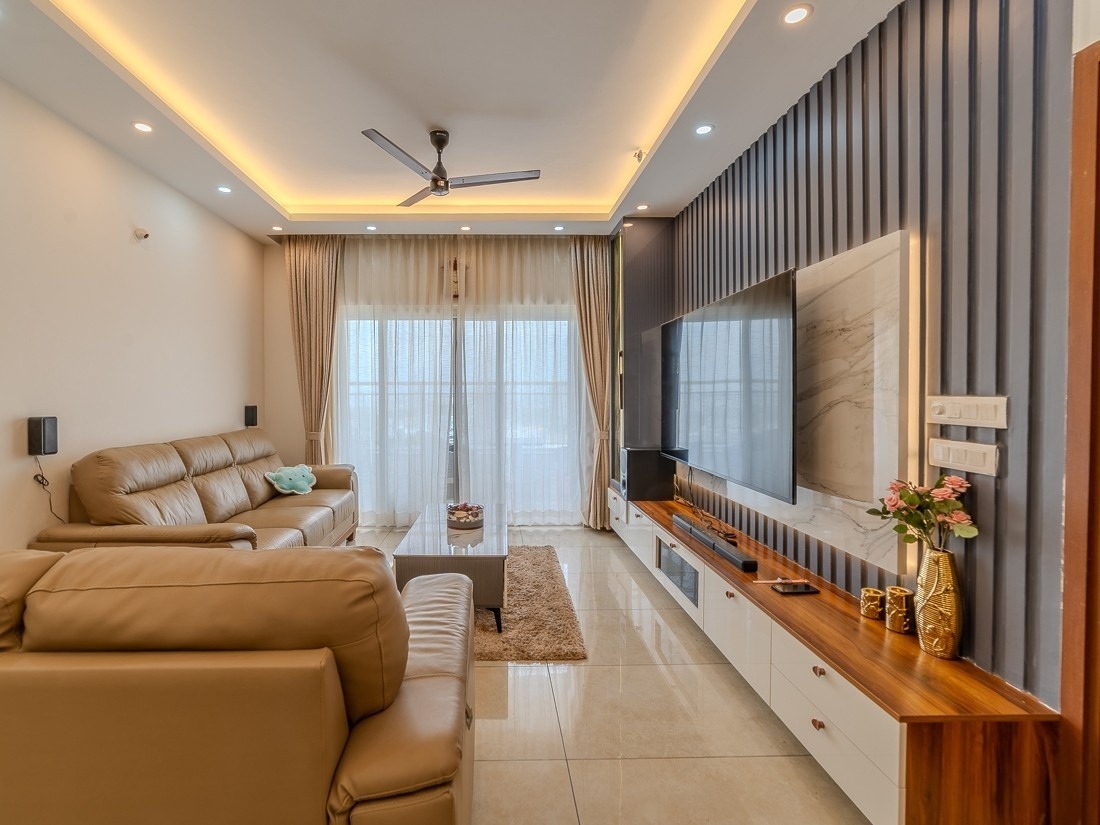
The TV wall is the visual anchor of almost every Indian living room. How you design it — the cabinet style, the surrounding materials, the lighting — determines the entire mood of the space. In 2024, TV unit design has evolved far beyond a brown laminate box sitting on legs. Today's TV walls are architecturally considered, storage-rich, and genuinely beautiful.
1. Popular TV Unit Design Styles in 2026
- Floor-to-Ceiling Panel Wall: The TV is recessed into a full-height panel — in wood, fluted MDF, stone, or a mix. Looks architectural and hides wires completely. The most searched TV design in India right now.
- Floating / Wall-Mounted Unit: A clean, minimal unit with the TV mounted above and open or closed storage below. Keeps the floor clear, making small rooms feel larger.
- Entertainment Wall with Built-In Shelving: Storage, display shelves, a fireplace niche, and the TV all integrated into one composition. Works beautifully for larger living rooms.
- Plank + Panel Combination: Mix of vertical fluted panels and horizontal shelves — a bespoke look that feels custom-built without the full cost.
- Alcove / Niche Design: A recessed cavity in the wall frames the TV. Looks expensive but is achievable with drywalling and a good carpenter.
"The single biggest upgrade you can make to a TV wall — beyond the cabinet itself — is hiding all cables in conduits inside the wall. The difference between a clean setup and a messy one is just ₹2,000 in trunking."
2. Best Materials for TV Units in Indian Homes
- Plywood with Veneer: The gold standard for durability. Teak, walnut, or oak veneers give a warm, natural look. More expensive but lasts 15+ years.
- MDF with Laminate: The most popular mid-range choice. Consistent finish, available in hundreds of colours and textures, and very workable for complex designs.
- MDF with PU Paint: A painted finish on MDF gives a smooth, lacquered look that photographs beautifully. High end.
- Fluted MDF Panels: Ready-made or routed grooves in MDF create the fashionable ribbed texture. Can be painted or finished with wood grain film.
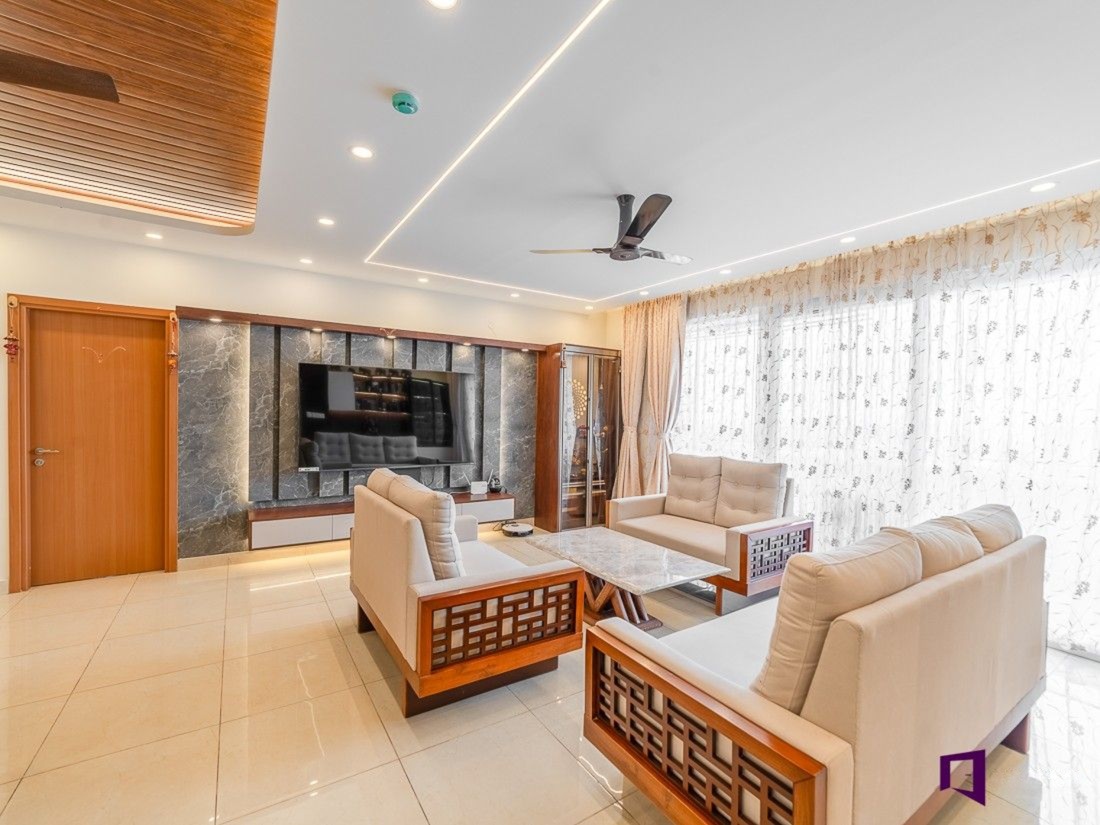
- Stone/Marble Panel: Used as a backdrop for the TV — either real stone, engineered stone, or large-format porcelain tiles in marble effect. Dramatic and luxurious.
3. Lighting: The Secret Weapon
The right lighting transforms a TV wall from furniture to art. Key lighting strategies:
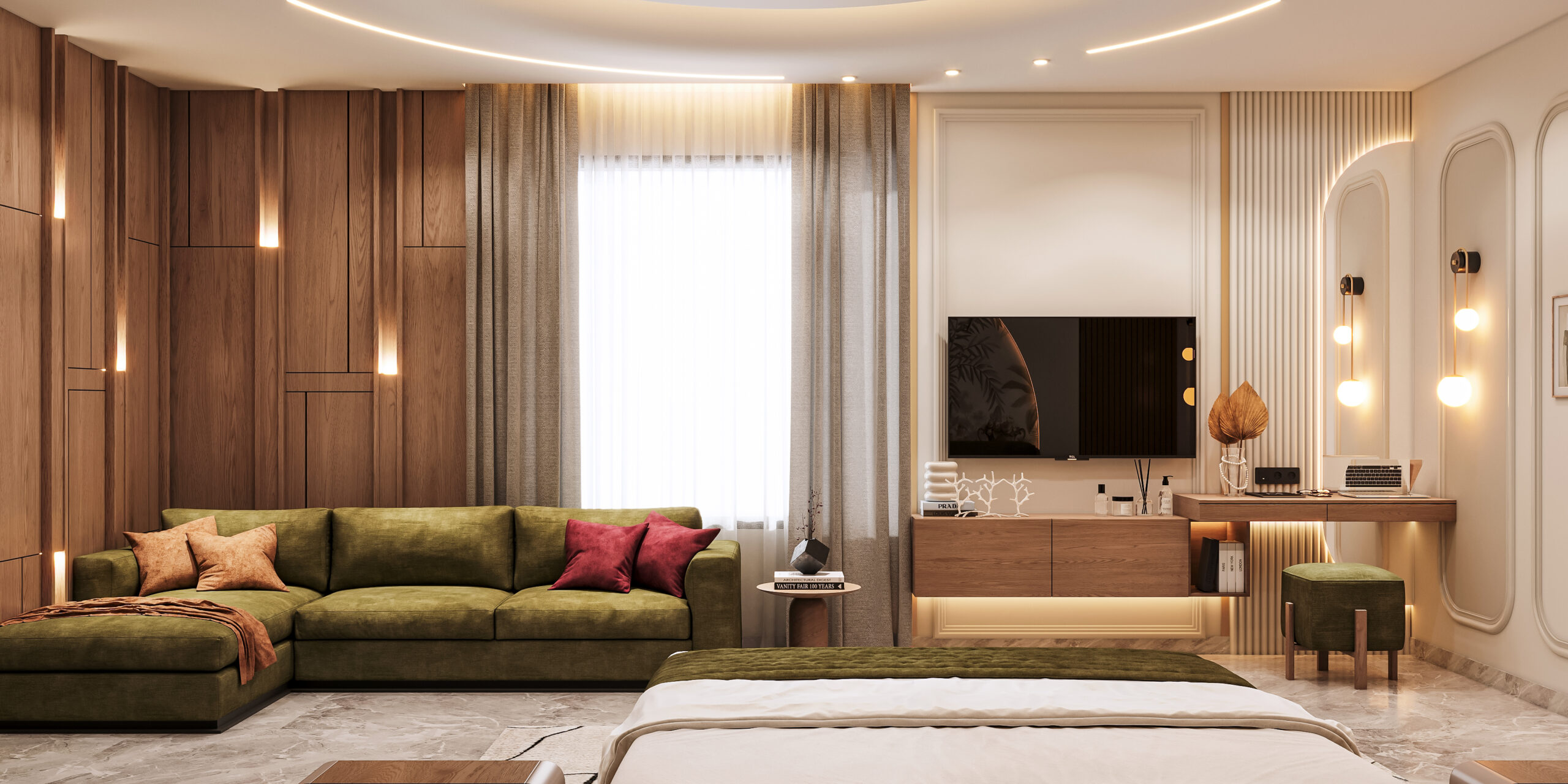
- Cove/LED Strip Backlighting: A warm LED strip behind the TV reduces eye strain and creates a beautiful halo effect. Use 2700K–3000K (warm white) strips, not cool white.
- Recessed Spotlights: For floating shelves and display niches, small recessed puck lights or LED strips underneath shelves showcase decorative objects elegantly.
- Neon or Colour Accent Lights: Trendy and fun for younger homeowners — a subtle colour wash behind the TV creates a gaming/cinema atmosphere at night.
4. Storage Integration Done Right
A TV unit with smart storage solves a major Indian living room problem — remote controls, set-top boxes, gaming consoles, books, and countless cables.
- Closed lower cabinets with push-to-open (no handles) for a seamless look.
- A dedicated router/set-top box niche with ventilation and cable management.
- Open floating shelves for display — keep them styled with 3 to 5 objects maximum. More looks cluttered.
- Drawer units flanking the TV for remote controls, coasters, and everyday essentials.
5. Common Design Mistakes to Avoid
- Mounting the TV too high — at eye level while seated (approx. 100–110 cm from floor to screen centre) is ideal.
- Making the TV unit too small relative to the wall — it looks out of proportion. The unit should span at least 70% of the wall width.
- Using too many different materials — stick to two or maximum three materials for a cohesive, designed look.
- Forgetting to plan wiring before construction — add conduits inside the wall before panelling starts.